
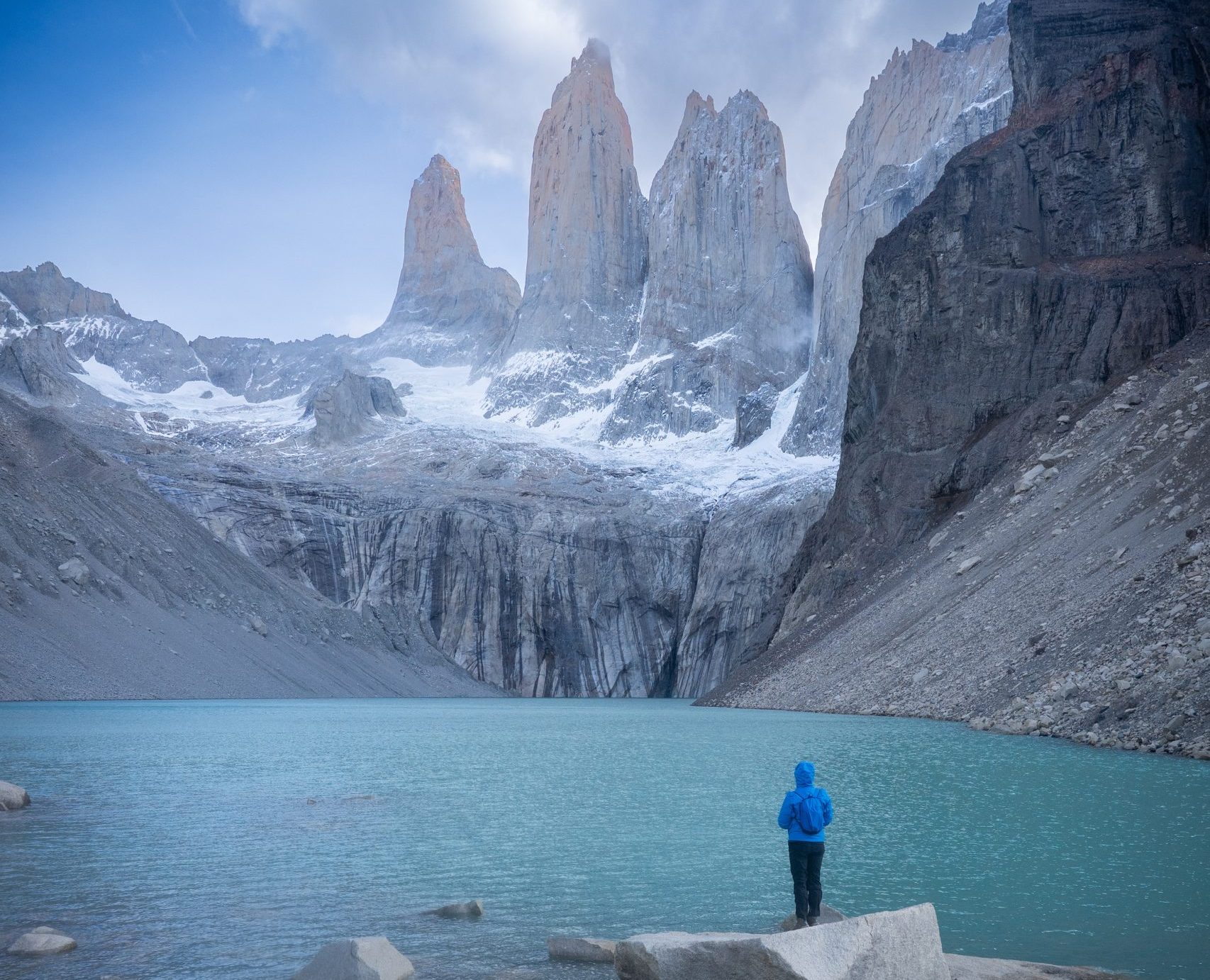
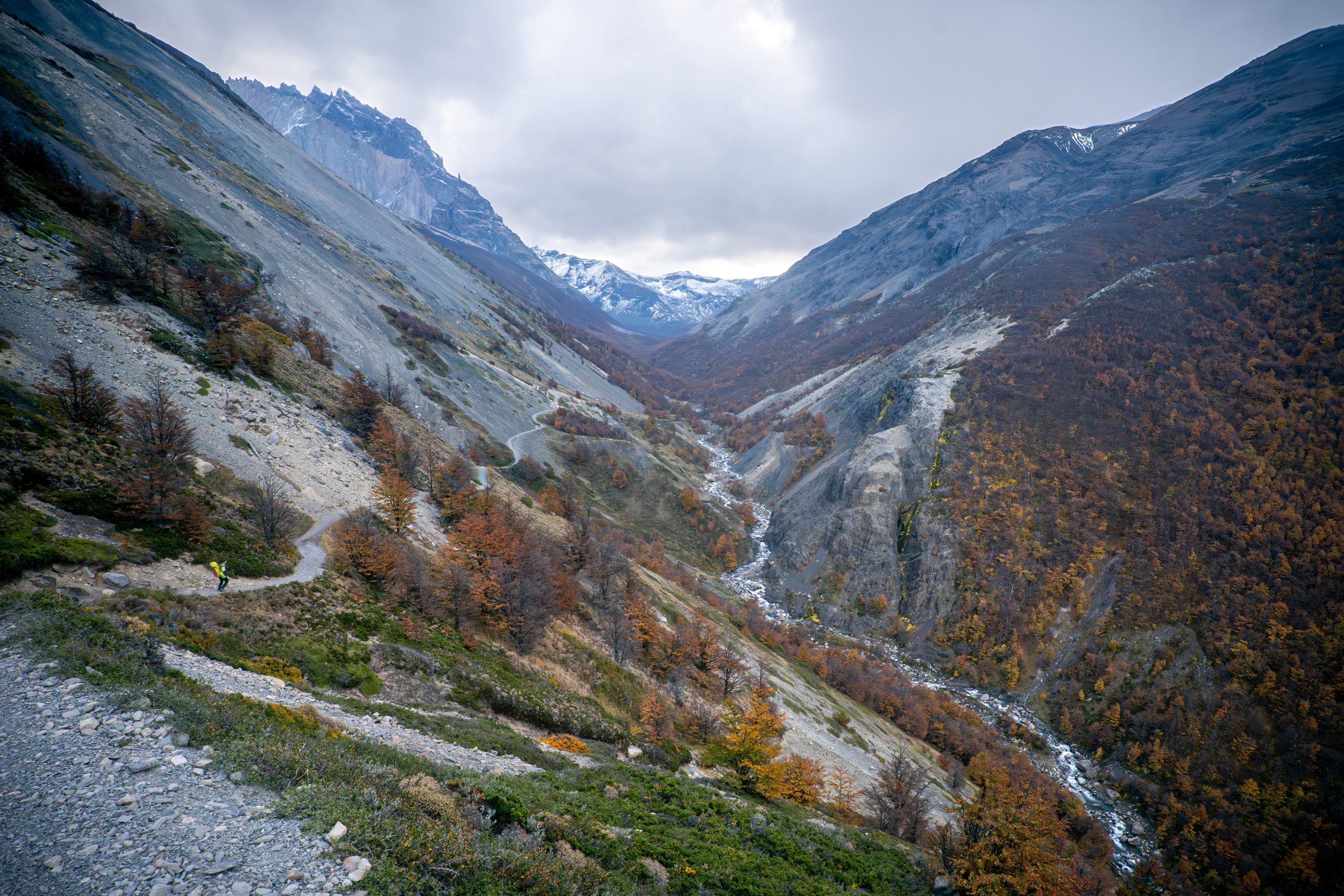
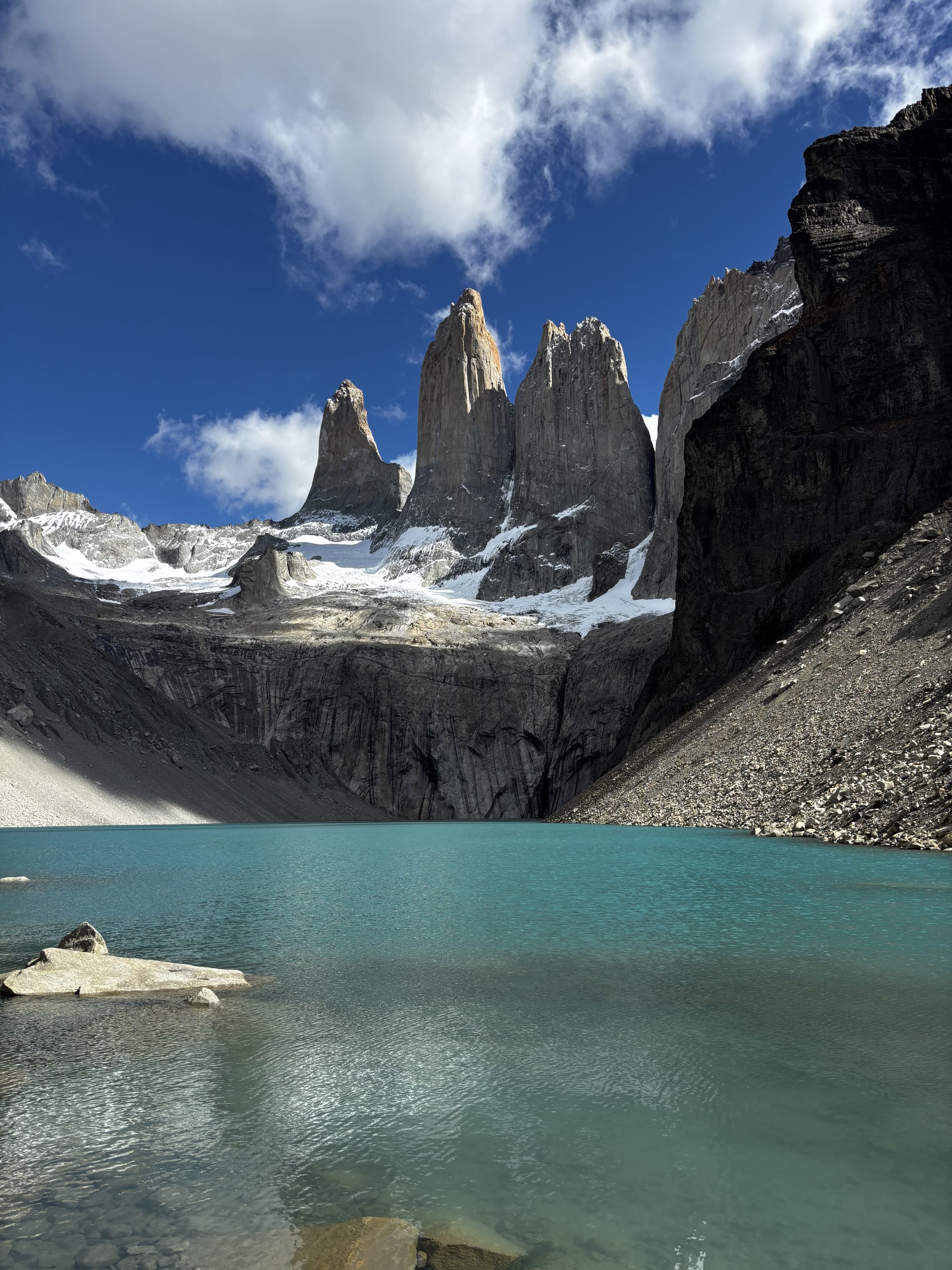
The Base of the Towers Trail is a medium to high–difficulty trek. The first 2 kilometers are relatively flat, after which the trail becomes more demanding due to the terrain, elevation gain, and physical effort required. The total distance is 23 km round trip, with an estimated hiking time of around 8 hours. The trail can be divided into three sections, each with its own level of difficulty and specific challenges, detailed below.
$90.000
Write to us and we’ll be happy to help!
You can book through our website by adding this experience to your cart.
Modifications and cancellations are subject to each provider’s policies when external services are involved, or to our own terms and conditions when the service is operated directly by us.
For an optimal experience, we recommend dressing in layers and bringing a water bottle, gloves, a hat, sunglasses, and sunscreen.
During this section, only the first 30 minutes are flat; afterward, a pronounced ascent continues for approximately two hours, walking over rocky terrain surrounded by shrub-type vegetation and, in the final part, a young lenga forest. This causes the entire first section to be exposed to wind, rain, ice, or snow, depending on the seasonal weather conditions. This entire route continues until reaching the Chilean Camp, passing through an area called the Windy Pass. In this section, there is a descent of about 30 minutes, depending on weather conditions. Certain risks exist, and to avoid them, attention must be paid to the instructions given by the guides in charge. The hiking pace should be constant, not fast, but continuous, in order to meet the expected tour times, making stops only to recover energy and cool down the body; these will last no more than 2 minutes.
Halfway along the trail there is a place called the Tree of Hugs. Here, there is a rest of approximately 5 minutes to recover, hydration is recommended, and an effort is made to keep the group as compact as possible. This is also the point where a passenger may decide to return on their own, as it is only 2.5 km from the starting point and is considered a safe area. Being close to the Welcome Center, any passenger who turns back returns on their own to the Welcome Center.
.
Upon arriving at the Chilean Camp, there is an approximately 10-minute break to have a snack. Restrooms are available and must be paid for, so it is recommended to bring cash. At this point, it is again decided—either personally by the passenger or based on the guide’s recommendation—whether to continue, especially if the guide observes that the passenger is moving significantly slower. The distance from the group is taken into account, as there is a closing time for the viewpoint and it must be passed before that time in order to reach it. If a passenger has any physical difficulty during the activity or noticeable breathing difficulties and is unable to recover between breaks, personal responsibility must be taken, as pushing beyond one’s limits may compromise personal safety. Most accidents occur primarily when this state of overexertion is not taken into consideration.
In this second section, the trail is less difficult, still featuring ascents and descents but with less rocky terrain and gentler slopes than the previous section. Most of the route is sheltered by a lenga forest, and along this stretch it is possible to refill water. There are also crossings of streams and rivers, which depending on the season may affect the continuity of the trek, as well as areas with accumulated snow and ice.
The hour-long walk through this forest allows time to recover the energy lost during the first section of the trail, concluding this stage upon arrival at the park rangers’ camp. Here, it is once again decided whether passengers will continue. This site includes a ranger station and public restrooms. Additionally, this section marks the trail cutoff point, which—depending on the season (winter or summer)—restricts visitor access if groups do not reach the estimated times required to complete the final section of the trail and return safely.
Additionally, when accompanied by accredited guides, passengers who decide not to continue—or whom the guide determines are unable to proceed—are offered the option of visiting an alternative viewpoint where, depending on weather conditions, it is possible to see the Towers without climbing the moraine.
This section of the trail takes approximately one hour, though it may take longer depending on the number of people on the trail. It is the most demanding part of the trek, with the greatest incline and difficulty, both in terms of terrain and exposure to weather conditions. The trail passes through forest and moraine areas (large rock formations), where the physical effort required is significantly higher than in the previous sections. This is where leg, knee, and joint issues become more evident, making both the ascent and the descent more challenging. Most accidents occur in this area due to overexertion and fatigue..
It is recommended that only those who reach this point in good physical condition and without injuries continue the ascent. From this point (CONAF Camp), access is restricted and the trail closure time is clearly indicated by signage: in summer, no one may proceed after 3:00 p.m., and in winter after 1:00 p.m., as park rangers begin closing the trail from the viewpoint downward, allowing no one to remain in the area. .

We design experiences that connect you with the true essence of the South. Hiking, scenic excursions, glacier navigations, horseback riding, and custom services created to experience Patagonia from the inside, with respect for nature and the guidance of local experts.